The Information Gap: Why Fake Factories Thrive and How to Verify Suppliers Like a Pro
- Mar 10
- 4 min read
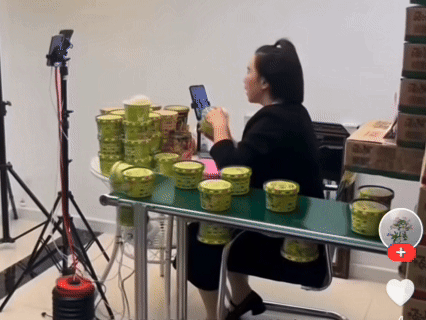
In early 2026, a viral video of a livestreamer selling noodles from a fake factory exposed a critical vulnerability in modern sourcing: the information gap. This scam works because buyers are thousands of miles away, relying on supplier-controlled information. This article will show you how to close that gap by using powerful, free verification tools to protect your business.
Part 1: The Problem — How Fake Factories Exploit Information Gaps
The fake factory scam succeeds by exploiting information asymmetry—the supplier controls everything you see. They create a convincing performance of legitimacy, making it impossible for remote buyers to tell reality from fiction. While the financial loss is painful, the hidden costs of wasted time, missed deadlines, and brand damage are often far more severe.
The Tactic: Livestreamers use green screens, props, and staged setups to create the illusion of a bustling factory floor, offering "direct-from-factory" prices.
Why It Works: It feels authentic and transparent, but it's a performance. Buyers are at an information disadvantage, unable to walk the floor or verify claims in person.
The Real Cost: Beyond the initial payment, you lose weeks of time, money on samples, and suffer production delays that can derail a product launch and damage your reputation.
The Root Cause: A real factory has a verifiable legal registration, reputation, and infrastructure. A fake one only has a compelling story. Without access to independent verification, you can't tell them apart.
Part 2: Why Information Gaps Exist in China Sourcing
Information gaps are not just about distance; they are built into the cultural and systemic structure of sourcing in China. While Western business relies on legal systems and contracts for trust, Chinese business culture prioritizes personal relationships (guānxi). This disconnect creates a void where common verification methods fail, as they provide an incomplete picture.
Cultural Differences: Trust is personal and built over time through in-person interaction, not through emails and contracts alone.
Alibaba Badges Are Insufficient: A "Gold Supplier" badge just means they paid a fee, and "Verified Supplier" is only a snapshot from a single point in time. Neither is a guarantee of quality or reliability.
Third-Party Audits Are Incomplete: A factory audit is a valuable snapshot, but it can't predict future behavior, corner-cutting, or whether your order will be prioritized.
The Local Advantage: A partner on the ground can walk into a factory unannounced, build real relationships, and provide immediate accountability. This physical presence bridges the information gap in a way remote tools cannot.
Part 3: The Verification Toolkit — Practical Steps to Close the Gap
You don’t have to be vulnerable. A systematic approach to verification can close the information gap significantly. The following official databases and practical steps are free, fast, and provide an authoritative look into a potential supplier.
Step 1: Use the Free SAMR Database (gsxt.gov.cn): This is the most critical step. Use the supplier's Chinese name to check their legal registration, business scope, and current status on China's official company registry. A refusal to provide the Chinese name is a major red flag.
Step 2: Cross-Check Other Official Platforms: Dig deeper into a company's history. Check for lawsuits on China Judgments Online (wenshu.court.gov.cn), blacklisted "dishonest debtors" on China Enforcement Information Online (zxgk.court.gov.cn), and administrative penalties on Credit China (creditchina.gov.cn).
Step 3: Conduct a Live Video Factory Tour: Ask for a live, unscripted tour of the production floor. Look for active production lines, workers, QC stations, and inventory. A polished or empty factory is a warning sign.
Step 4: Order a Third-Party Audit (for orders >$5,000): For a few hundred dollars, companies like QIMA or V-Trust will conduct a physical audit and provide a detailed report. This is cheap insurance for a significant investment.
Step 5: Get References from Existing Buyers: Ask the supplier for references from other customers, preferably in your home market. A five-minute phone call can reveal more than hours of online research.
Part 4: The Red Flags Checklist
Prices way below market: The quality is likely different, or it's a scam.
Pressure to move fast: Legitimate suppliers don't need to pressure you.
Gmail or QQ email address: Real factories use official company domains.
Reluctance to sign a contract: Professional suppliers use contracts. If they refuse, walk away.
Payment via Western Union/Crypto: This is almost always a scam. Use bank transfers or Trade Assurance.
Refusal to do a factory audit: A supplier hiding from a third-party audit is hiding something.
Part 5: Why Boots-on-Ground Still Wins
Even with the best online tools, a remote buyer can never fully close the information gap. You can't see what happens inside the factory day-to-day. This is where having a local partner becomes an unbeatable advantage, shifting the dynamic from transactional to relational.
On-Site Access: Spot problems with quality or production before they become crises.
Real-Time Negotiation: Negotiate effectively within the context of Chinese business culture.
Relationship Continuity: Build long-term trust that leads to better pricing and priority.
Accountability: A local partner has skin in the game and can show up at the factory tomorrow if something goes wrong. This changes everything.
Conclusion: Closing the Gap
The information gap in China sourcing is real, but it is manageable. The fake factory phenomenon thrives on the trust of buyers who don't verify. By using the free and powerful tools in this guide, you can systematically close that gap and protect your investment. Verification is not a cost; it's the best insurance you can buy. The real currency in sourcing is trust, and trust requires transparency. Demand it, or work with a partner who can.



Comments